

Trenchless Pipe Repair in Clifton, NJ: Fix It Underground Without Tearing Up Your Yard.
Your sewer lateral is cracked and the first thing you picture is a backhoe tearing up your lawn. We fix the pipe from the inside, through small access points, with no trench across your yard. We start with a camera inspection and tell you straight whether trenchless fits.
Is Trenchless Right for Your Line? 4 Quick Checks
Not every underground pipe qualifies. Run through these before you call anyone.
Cracked but holding shape
Your pipe is cracked, leaking, or invaded by roots, but still mostly holding its shape. The liner needs a host pipe to form against.
Something worth saving on top
The line runs under your lawn, driveway, patio, or landscaping you want to keep. That is exactly what trenchless exists for.
Camera shows the inside
You have had a camera inspection, or want one, that shows what the pipe looks like inside. We never quote trenchless work blind.
Repair, not restoration
You would rather pay for a repair than for a repair plus a landscaping bill. Digging adds thousands in restoration after the pipe work.
If the pipe is fully collapsed or badly bellied, trenchless may not fit. We will tell you that on the camera footage, not after you have paid. Call (973) 555-0134
How Trenchless Pipe Repair Works
Five steps, plain words. No trench. That is cured in place pipe, or CIPP: one access point in, one access point out. Your lawn stays a lawn.
Camera inspection
A small camera goes into the line and we watch the inside of your pipe on a screen. We show you the footage before anyone quotes anything. Cracks, roots, offsets, bellies. You see what we see.
Written flat rate quote
If the footage shows your line qualifies, you get one number in writing for the whole job, approved by you before we start. It does not move while we work.
Clean and line the pipe
Roots and scale get cleared with hydro jetting, then a resin soaked liner goes in through the access point and cures in place with hot water, steam, or UV light, forming a new pipe inside the old one.
Final camera proof
We run the camera through again and show you the finished liner. A cured liner looks smooth and even on screen. You see the proof before we pack up.
Our drain cleaning page covers the hydro jetting step in detail. Start With a Camera Inspection
Pipe Relining vs Pipe Bursting: Which One Fits Your Line?
Two trenchless methods, different jobs. Here is the honest difference.
| Pipe relining (CIPP) | Pipe bursting | |
|---|---|---|
| What it does | Builds a new pipe inside the old one | Pulls a new pipe through, fracturing the old pipe outward |
| Best for | Cracked, leaking, or root invaded pipe that still holds its shape | Collapsed, badly undersized, or misshapen pipe |
| Pipe size after | Slightly smaller inside, but the smooth surface keeps flow strong | Same size or larger, brand new pipe |
| Access needed | One or two small access points | Entry and exit pits, still far less digging than a full trench |
| Yard impact | ✓ Minimal | ✓ Minimal |
Both beat open trench digging for the right line. Neither fits every line. The camera footage decides, not the sales pitch.
The Honest Limits of Trenchless
Trenchless is great work, but it is not magic. Any company that sells it for every underground problem is selling, not diagnosing. Here is where we say no.
Fully collapsed pipe
The liner needs a host pipe to form against. If the old pipe has caved in completely, there is nothing to line. Pipe bursting or open excavation is the answer, and we will tell you that.
Severe bellies
A belly is a sagging section where waste pools instead of flowing. A liner follows the shape of the old pipe, so it copies the belly. Lining a bellied line gives you a smooth new pipe that still does not drain right.
Big offsets
If pipe sections have shifted apart significantly, the liner cannot bridge the gap reliably. Excavation at that spot is the honest fix.
Roots grow back? No.
Roots get in through joints and cracks. A cured liner has no joints and no cracks, so there is nothing for roots to grab. The roots outside the pipe stay outside.
We camera first, always. Every trenchless quote starts with a camera inspection, and that pre-quote inspection is free. Get an Honest Answer
Why Clifton Underground Lines Fail
Underground pipes in Clifton fail for the same reasons they fail everywhere in North Jersey. Age first. Nearly 7 in 10 Clifton homes were built before 1960, and the underground lines are the same age as the houses. Clay and cast iron lines from that era are past their prime.
Roots second. Tree roots find the joints in old clay and cast iron pipe and grow in through the tiniest openings. Once inside, they catch everything flowing past and grow into a mat. This is the most common reason for recurring backups in older lines.
Ground movement third. Freeze and thaw cycles shift soil around buried pipe. Over decades, that movement stresses joints and creates offsets and bellies.
The result is predictable: cracked joints, root mats, slow drains that keep coming back, and eventually a line that needs more than another snaking.
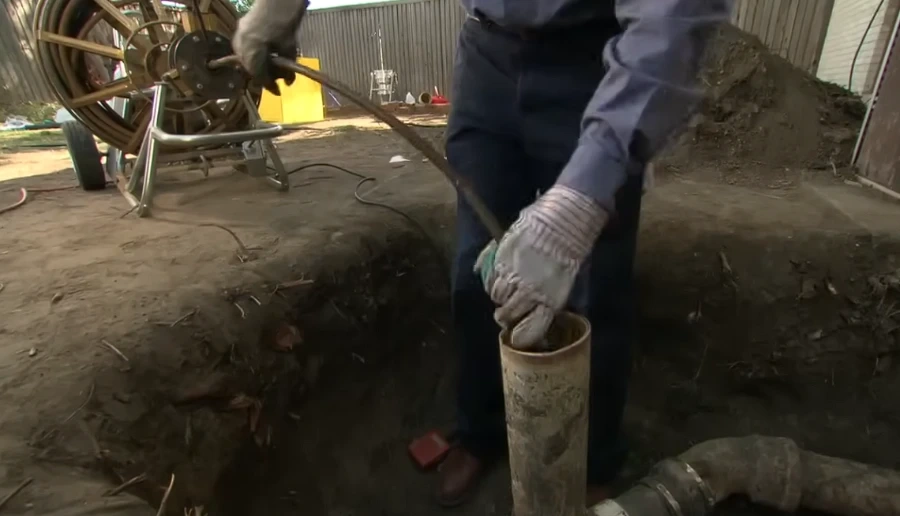
What Trenchless Pipe Repair Costs in Clifton
Real numbers, no call for a quote games. Your final price is confirmed in writing before any work starts.
| Service | Typical Range |
|---|---|
| CIPP pipe lining | $80 to $250 per foot |
| Typical residential lining job | $4,000 to $12,000 |
| Pipe bursting | $60 to $200 per foot |
| Traditional open trench dig, for comparison | $150 to $450 per foot, plus restoration |
Typical ranges. Final price confirmed in writing before any work starts. Industry testing cites a multi-decade structural lifespan for properly installed CIPP liners. A lined pipe is not a patch. It is a new pipe inside the old one, built to last decades.
Full breakdown on our pipe repair cost page. Get Your Exact Written Quote
Trenchless vs Traditional Digging: The Real Cost Comparison
Per foot, trenchless and digging can look close. The difference is what comes after.
| Trenchless | Open trench digging | |
|---|---|---|
| Yard disruption | ✓ One or two small access pits | Backhoe, pile of dirt, trench across the yard |
| Restoration bill | ✓ Minimal | $5,000 to $15,000 for sod, driveway, patio, fences |
| Typical timeline | ✓ A day or two | A week or more |
| Best when | Line runs under driveway, patio, landscaping, or an addition | Line runs under open lawn with nothing valuable on top |
If your line runs under open lawn, digging can be competitive. Under a driveway or patio, trenchless usually wins on total cost and on disruption. Which Costs Less for Your Line?
When to Call Us About an Underground Line
Same line keeps backing up
Recurring clogs in one line usually mean roots, a break, or a belly, not bad luck. Another snaking treats the symptom. A camera finds the cause.
Someone else found damage
A camera inspection from another company showed cracks or root intrusion? Bring the footage or have us run our own camera. We will give you a straight answer on whether trenchless fits.
Buying an older Clifton home
A sewer camera inspection before closing is cheap insurance against inheriting a failed line. Nearly 7 in 10 Clifton homes predate 1960, and their underground lines are the same age.
Above ground pipe problems
Green stains or pinholes on indoor copper are a different job. See our copper pipe repair page for that.
Where We Respond in Clifton
We serve every Clifton neighborhood and all four ZIP codes, 07011 to 07014.
Allwood & Richfield
1950s homes with original clay or cast iron lines, now 60 to 70 years old and past their prime.
Athenia & Botany Village
Older multi-family homes where the sewer run passes under driveways and additions put in years after the pipe.
Lakeview & Middle Village
Some of the oldest housing stock, with mature trees over the sewer run feeding root intrusion.
Albion, Delawanna, Greglawn & Knollwood
Underground line problems follow housing age, not the neighborhood name. If your home predates 1960, you are in our daily service area.
Proudly serving 07011 · 07012 · 07013 · 07014
Trenchless Pipe Repair FAQs
Straight answers to the questions homeowners ask us most.
How does trenchless pipe repair work?
What is the difference between pipe relining and pipe bursting?
How long does trenchless pipe lining last?
Is trenchless pipe repair cheaper than digging?
Does pipe lining shrink the pipe’s inside diameter?
Does pipe relining actually work?
How is a broken pipe underground repaired without digging up the yard?
A Broken Underground Line Does Not Have to Mean a Torn Up Yard
The process starts with a camera, not a backhoe. We show you the footage, tell you straight whether relining or bursting fits, and say no when digging is the honest answer. Learn more about Clifton Pipe Pros and our other pipe services.
Call (973) 555-0134