

Leaking Pipe Repair in Clifton, NJ: Wasting Water Every Hour? We Pinpoint It Today.
A brown stain is spreading across your ceiling. Your water bill climbed again, and you did not use more water. Got a leak? Our leaking pipe repair in Clifton finds it the same day. Call us. We find the exact spot with thermal imaging and acoustic gear, then fix it the same day.
Active Leak Right Now? Do These 3 Things First
Water actively dripping or flowing? A pinhole drip with a bucket under it can wait until morning. Gushing water, a sagging ceiling, or water near your electrical panel cannot. If it looks like a burst, see our burst pipe repair page.
Shut off your main water valve. It is usually where the water line enters your home, often in the basement near the water meter or by the water heater. Turn it clockwise until it stops.
Call (973) 555-0134. Tell us what you see and where. We will tell you whether it can wait a day or needs us tonight.
Put a bucket under the drip and move valuables. Move rugs, electronics, and papers off the floor. Take photos of the damage for your insurance claim.
Signs of a Hidden Pipe Leak
Most leaks do not announce themselves. They hide inside walls, under floors, and above ceilings while they do their damage. Watch for these seven signs. If you see two or more, you probably have one.
Water Stain on Ceiling or Wall
Stains start yellow or brown and grow wider over weeks. A stain that keeps growing after rain has stopped is not a roof problem. It is a supply line dripping above. Read our guide on water stains on your ceiling.
Musty Smell That Was Not There Before
Mold starts within 24 to 48 hours on damp materials. If one room or closet smells like a basement and nothing looks wet, water is feeding mold inside the wall cavity.
Water Bill Keeps Climbing
Compare this month to the same month last year. A steady climb with no change in your habits means water is escaping somewhere you cannot see. One in ten homes has a leak wasting 90 gallons or more per day.
Running Water Sound When Everything Is Off
Stand in a quiet room with every faucet closed. A faint hiss or trickle inside the wall means pressurized water is going somewhere it should not. Our acoustic sensor hears through drywall what your ears cannot isolate.
Water Meter Keeps Spinning
With all taps off and no appliance running, a moving meter proves water is leaving your system. Try the two hour meter test: read the meter, use no water for two hours, read it again.
Low Water Pressure in Part of the House
A leak bleeds off pressure before it reaches your faucet. If the kitchen is fine but the upstairs shower went weak, the run between them may be leaking. More on low water pressure.
Warm Spot on the Floor
A hot water line leaking under the slab heats the concrete above it. Walk barefoot across basement or ground floor rooms. A warm patch that stays warm day after day points to a slab leak, so call before it gets worse.
See One of These Signs?
Two or more together means call for leak detection. Finding it early is always cheaper.
Pipe Leak Detection in Clifton: We Find It Without Tearing Walls
Cutting drywall to hunt for a leak is guesswork, and guesswork costs you money. We locate the leak first, show you where it is, and then talk about the repair. Five tools do the finding.
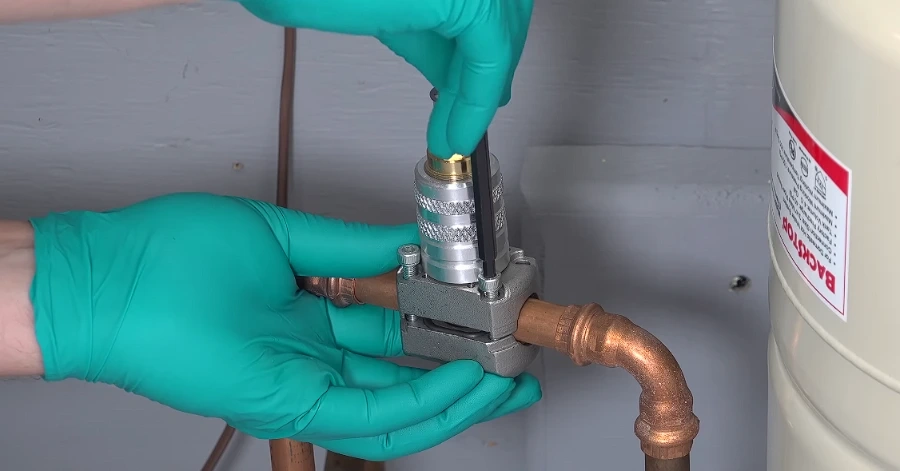
A thermal imaging camera reads surface temperature. Water spreading inside a wall cools the drywall, and the camera shows the cold trail as a dark patch. An acoustic listening device picks up the hiss of pressurized water escaping through drywall, tile, and concrete. A moisture meter maps how far the water has spread. An inspection camera goes inside the pipe on a flexible cable. A pressure decay test isolates sections of pipe and measures which run loses pressure.
Here is the honest part about price. Standalone leak detection is a separate paid service: $150 to $400. You get a written report with the leak location, photos, and the repair quote. On a repair visit, locating the leak is part of the job. If you hire us to fix the leak, we do not charge you twice for finding it.
Why Clifton Homes Leak
Clifton’s housing stock is old, and old pipes leak. Nearly 7 in 10 homes here were built before 1960. That means most of the city runs on pipe systems installed 60 to 70 years ago. Pipes this age fail from age, not from anything the homeowner did wrong.
Copper in the Pinhole Years
In Allwood and Richfield, the 1950s colonials and capes run on copper. That copper is now 65 to 75 years old, and it is in the pinhole years. Tiny pits form inside the tubing. One pinhole gets patched, then another appears a few feet away. See our copper pipe repair page.
Galvanized Past Its Life
In Athenia and Botany Village, the older multi family homes still run on galvanized steel. Galvanized pipe typically lasts 20 to 50 years. After that, rust eats the wall from the inside out. Galvanized past 50 years is living on borrowed time.
High Water Pressure
Plumbing code requires a pressure reducing valve where household pressure exceeds 80 PSI. Anything above that strains joints, valves, and old soldered connections around the clock. Repeated freeze and thaw cycles also work joints loose in unheated areas.
From Your Call to Fixed Pipe: What Actually Happens
Estimates on visible repairs are free. If you say no, you owe nothing.
You call, we answer
A real person picks up. We ask three questions: where do you see water, is the main valve off, and is anyone in danger. If water is flowing, we walk you through shutting it off on the phone.
We locate the leak and show you
Thermal camera, acoustic sensor, moisture meter, whatever the situation calls for. We show you what we found before we talk about money. You see the leak, the corrosion, or the cracked fitting yourself.
You approve a written price
A flat rate agreed before we start, so the number does not move while we work. No hourly meter running while you watch. Then you get the repair price in writing.
Repair, test, clean up
We cut out the bad length and join new pipe with the right fitting for your system. Then we pressure test the line, turn the water back on slowly, and check every joint for slow drips.
The Tools We Bring
General plumbers carry a toolbox. Pipe specialists carry diagnostic gear. Here is what is on our truck for leak work. NJ requires plumbing work to be done by, or under the supervision of, a licensed Master Plumber. Our work meets that standard.
Thermal Imaging Camera
Finds the cold trail of water inside walls and ceilings without opening them. This is the first tool out on a hidden leak call.
Acoustic Listening Device
Hears the hiss of escaping water through drywall, tile, and concrete. Pinpoints the spot so we cut one small opening, not three exploratory holes.
Moisture Meter
Maps how far water has spread into framing and drywall. Tells us whether the damage is a small patch or a bigger drying job.
Inspection Camera
Goes inside drain lines and shows us what we are dealing with before we quote. We show you the footage on the screen.
Pressure Testing Gear
Verifies every repair holds at full pressure before we pack up. Every joint gets checked for slow drips, not just the one we replaced.
Specialist Gear, Honest Price
Finding the leak fast is half the job. Many general shops do not carry all of it.
What Leak Repair Costs in Clifton
No call for a quote games. Here are the real ranges for Clifton leak jobs. Your exact price is confirmed in writing before any work starts.
| Repair scenario | Typical range |
|---|---|
| Leak detection (thermal plus acoustic) | $150 to $400 |
| Pinhole fix, accessible pipe | $200 to $400 |
| Leak inside finished wall or ceiling | $1,000 to $4,000 |
| Leaking joint under sink | $150 to $350 |
Typical ranges. Your final price is confirmed in writing before any work starts. If the leak turns out to be a burst, our burst pipe repair page covers that pricing.
What moves your price up or down
- Access: a pinhole in an open basement ceiling costs less than one buried behind a tiled shower wall.
- Pipe material: copper and PEX sections are straightforward. Galvanized takes longer because old threads and fittings fight back.
- Length of damaged section: one pinhole is a quick swap. A run weakened along several feet needs a longer replacement.
- Wall and ceiling repair: we cut clean and small, but drywall patching and paint are extra unless you handle them.
- Time of call: emergency night and weekend work carries a premium, which we state upfront on the phone.
Full breakdown on our pipe repair cost page.
One Leak or a Failing System?
One leak does not always mean the whole system is done. Our rule on every call is simple. We show you the inside of your pipe with a camera when the call is close. You see what we see, then you decide. Read the full comparison on our pipe replacement page.
✓ Repair the Section When
The leak is isolated and the rest of the line looks solid. A single pinhole in copper with clean surrounding pipe is a repair, not a repipe. A loose joint under the sink is a fitting replacement.
✓ Consider Replacement When
You have had two or more leaks in the last couple of years, the water runs rusty, or the pipe is galvanized past 50 years. Corrosion does not stay in one spot. Patching it leaves the next leak waiting to happen.
When to Call Us
A small fix today beats a big bill later. Call if any of these sound familiar.
Water Bill Spiked
Call today if your water bill spiked with no explanation. A hidden supply leak gets more expensive every day it runs, in water cost and in damage.
Stain Is Growing
Call today if a ceiling or wall stain is growing. A stain that spreads week to week means active water, not an old event.
Musty Smell in One Room
Call today if you smell musty in one room. Mold starts fast behind walls, and the leak feeding it will not stop on its own.
Buying an Older Clifton Home
Call before you buy an older Clifton home. A camera inspection and pressure check before closing tells you whether you are buying sound pipes or someone else’s repipe bill.
Before Winter
Call before winter. Freeze and thaw cycles punish weak joints. A small seep in October can become a burst in January. See our Clifton pipe winterization guide.
Not Sure It Can Wait?
Tell us what you see. We will tell you whether it can wait a day or needs us tonight.
Will Insurance Cover Your Pipe Leak? Read This First
The key distinction: standard homeowners policies cover sudden and accidental water damage. They do not cover damage from gradual leaks, seepage, or deferred maintenance. That single distinction decides most leak claims.
A slow drip you ignored for months is the classic denied claim. The adjuster sees water stains layered over old paint and calls it gradual. A pipe that failed suddenly, with no warning and prompt reporting, is the covered kind. Same water damage. Different story on paper.
The numbers show why documentation matters. Water damage carries the highest denial rate of any homeowners claim type. Industry estimates put it near 1 in 10, mostly over sudden versus gradual disputes.
Do these four things:
- Photograph everything, including the stain as it grows.
- Keep the failed section of pipe after we cut it out, put it in a bag, and write the date on it.
- Save every receipt, including ours.
- Report the claim promptly, because delays give adjusters room to argue the damage sat for weeks.
One more honest note. Insurance pays for the water damage to your home. It almost never pays for the pipe repair itself. That part is on you, which is another reason the flat rate price matters.
Why a Pipe Specialist Instead of a General Plumber
General plumbers do a bit of everything: fixtures, water heaters, remodels. We do pipes and drains. Nothing else.
The Right Fittings Are Already on the Truck
Copper, PEX, and CPVC, plus press tools and soldering gear staged for immediate use. No supply house run while your ceiling drips.
A Crew That Specializes in Finding Leaks
We know where builders ran supply lines in each era of home, so we aim the camera at the right spot the first time.
Detection Gear on Every Call
Thermal camera, acoustic sensor, moisture meter, inspection camera. Finding the leak fast is half the job. Many general shops do not carry all of it.
Where We Find Leaks in Clifton
We serve every Clifton neighborhood and all four ZIP codes, 07011 to 07014. We know the housing patterns, so we know where to look first.
Allwood
1950s colonials and capes on copper, now in the pinhole years. Tiny pits at spots with high pressure or leftover flux.
Athenia
Older multi family homes still running galvanized steel. Rust eats the wall from the inside until joints start weeping.
Botany Village
Historic area homes with aging lines. Leak detection without tearing up original plaster.
Richfield
Mid-century homes where freeze and thaw cycles work older pipe joints loose year after year.
Delawanna
Near the Delawanna station, two family blocks with shared aging lines and damp basements that hide slow seeps.
Lakeview
Some of the oldest housing stock. Original galvanized and early copper lines well past their working life.
Middle Village
Older homes with aging supply lines. The finished basements here show the first sign as a damp carpet tile.
Albion, Greglawn & Knollwood
Post-war neighborhoods near Garret Mountain. You are in our daily service area.
Proudly serving 07011 · 07012 · 07013 · 07014
Leaking Pipe Repair FAQs
Straight answers to the questions homeowners ask us most.
What are the signs of a hidden pipe leak inside a wall?
How do plumbers find leaks without tearing down walls?
How do I check my water meter for a hidden leak?
What is the first thing to do when you discover a water leak at home?
Why should plumbing leaks be repaired immediately instead of waiting?
Does pipe repair tape actually work?
How do you repair a pipe leaking at the joint?
Who patches the wall after you open it to fix a leak?
The Bottom Line
A hidden leak is a slow bill and a fast problem. It wastes water every hour, feeds mold within days, and turns into a denied insurance claim if you let it sit. If water is flowing, shut off your main valve, call (973) 555-0134, and we will pinpoint it today. We will find it without tearing your walls apart, show you the price in writing, and get your water running right.
Call (973) 555-0134Prefer to reach us online? Send us a message.