

Frozen Pipe Repair in Clifton, NJ: No Water This Morning? We Thaw It Before It Bursts.
You turn the faucet and nothing comes out. Somewhere in a wall or crawlspace, a section of pipe has frozen solid. Need frozen pipe repair in Clifton? Call before that ice plug turns into a burst. We find the freeze with a thermal camera and thaw it with controlled heat. Same day service.
No Water Right Now? Do These 4 Things First
A frozen pipe is a burst waiting to happen. What you do in the next few minutes decides which one you get.
Open the dead faucet to a trickle. Leave it open. When the ice starts melting, water and pressure need somewhere to go. A closed faucet traps pressure behind the ice plug, and trapped pressure is what splits pipes.
Call (973) 555-0134. Tell us which faucets are dead and whether you see frost on any exposed pipe. We will tell you what to do while our truck is on the way.
Do NOT use an open flame. No propane torch, no heat gun on high, no space heater pressed against the pipe. Gentle heat only, never flame. A torch near wood framing and insulation is how thawing attempts turn into house fires.
Know where your main valve is. If the pipe already split and water starts flowing where it should not, shutting the main off fast is the move that saves your floors.
Three Mistakes That Turn a Freeze Into a Burst
Many frozen pipes we see could have been thawed without damage. These three mistakes are what turn them into bursts.
The Open Flame
Propane torches and heat guns on high near wood framing, insulation, and drywall start fires. Pipes run through the most flammable parts of your house. A hair dryer on low or warm towels is the most heat an exposed pipe should ever get from a homeowner, and even then, keep the dryer moving and never leave it.
Cranking the Heat to 90F
A frozen section thaws unevenly under blast heat. The ice plug loosens in one spot while pressure spikes behind it, and the split can tear wide open. Steady moderate heat plus an open faucet to relieve pressure works better than a sauna.
Waiting to See If It Fixes Itself
A frozen pipe does not heal. The longer the ice plug sits, the more pressure cycles the pipe takes as temperatures swing. What starts as a $200 to $500 thaw visit becomes a $1,000 to $4,000 burst repair inside a wall. Call early. Thawing is cheaper than repairing.
Is It Frozen, or Did It Already Burst?
No water on a cold morning plus dry floors means frozen. Water where it should not be means it burst. That difference decides what you do next.
Frozen Looks Like This
You turn on a faucet and get nothing, or just a thin trickle. Other faucets in the house may work fine, which tells you the freeze is in the line serving the dead faucet. You might see frost on the outside of an exposed pipe in the basement or crawlspace. The house is quiet. No water is flowing where it should not.
Burst Looks Like This
Water spraying or pooling. A ceiling stain that is growing by the hour. The sound of running water inside a wall when every tap is off. A water meter that keeps spinning with all faucets closed. If you see any of these, shut your main valve off and treat it as an emergency.
Not sure which one you have? Call us and describe what you see. We will tell you straight whether it sounds like a freeze or a burst before we roll a truck. If it burst, our burst pipe repair page walks through exactly what to do. Not Sure? Call (973) 555-0134
Why Clifton Pipes Freeze
It comes down to where the pipes run. Pipes in unheated areas are vulnerable below 20F. Clifton sits in USDA Zone 7b, where the first frost typically lands between November 1 and 10, and winter nights drop below that line regularly. Plenty of local pipe runs sit right in the cold.
The worst spots are the usual suspects. Supply lines in exterior walls. Runs through unheated crawlspaces and garages. Pipes in attics above the insulation. 1950s colonials and capes in Allwood and Richfield are a good example. Many of these homes have plumbing run through cold chases and along outside walls, which was standard practice when they were built. Finished basements add another classic freeze zone: supply lines often pass through cold rim joists, where insulation is thin or missing.
The older multi family homes in Athenia and Botany Village have their own version of the problem. These buildings often have long pipe runs through unheated common areas, plus additions where the insulation is thin. Galvanized steel lines in these homes are already narrowed by decades of rust inside, so even a partial freeze chokes flow fast.
Nearly 7 in 10 Clifton homes were built before 1960 (U.S. Census Bureau, 2021 American Community Survey). That means most local pipe systems were routed by builders who never imagined today’s freeze cycles, and many have never been insulated since.
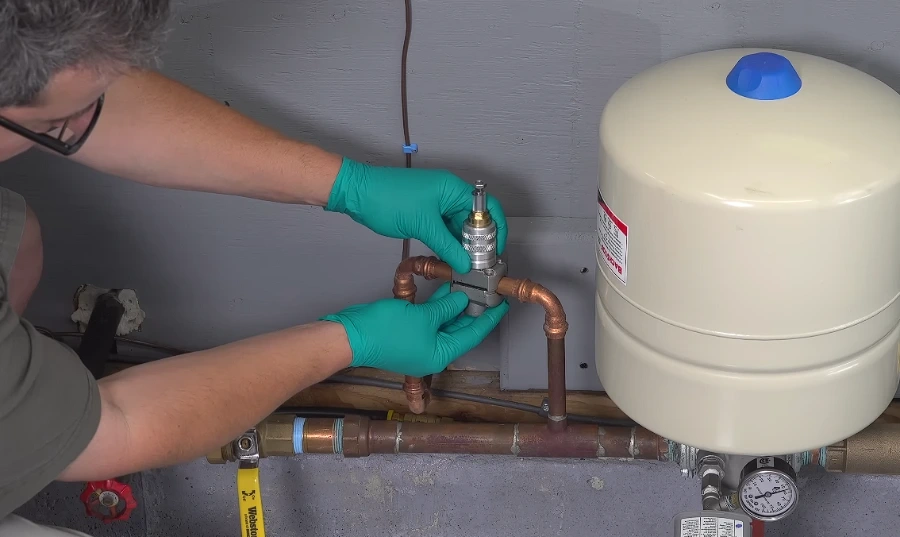
How We Thaw It Safely
Thawing a pipe is simple work that goes wrong when it is rushed. Here is exactly what happens on our visit.
Find the frozen section first
Locating the freeze with a thermal camera is part of the job. The camera shows us the cold line where ice has formed, so we work on the right section and not guessing. Guessing is how walls get opened for no reason.
Open the faucet, then thaw toward it
Before any heat goes on, the faucet gets opened to a trickle. Controlled heat goes on the frozen section starting nearest the faucet and working back. A heat gun on low, warm towels, or a moving hair dryer. Never a flame.
Check for splits before full pressure
After the line flows again, we inspect the section for splits and hairline cracks and pressure test before turning the water back up all the way. A split that opens under full pressure after we leave is a failure, so we catch it now.
Insulate so it does not refreeze
Foam sleeves on the exposed run, and we flag any air leaks around it that need sealing. The goal is not just to thaw it today but to keep it from freezing again next week.
NJ requires plumbing work to be done by, or under the supervision of, a licensed Master Plumber. Our thaw and repair work meets that standard. Our master license number is [LICENSE NUMBER].
Prevention That Actually Works
You cannot change the weather, but you can change how ready your pipes are for it.
Insulate the Exposed Runs
Foam pipe sleeves cost little and take minutes to put on. Cover every supply line you can reach in the basement, crawlspace, attic, and garage. Pay special attention to runs along exterior walls.
Seal the Air Leaks
Cold air pouring through gaps around pipes matters more than the outdoor temperature alone. Seal where pipes pass through exterior walls, the foundation, and the rim joist area with caulk or foam.
Let Faucets Drip on the Coldest Nights
A slow drip on a faucet fed by an exposed line keeps water moving and relieves pressure. It costs pennies in water. Compare that to a burst repair.
Keep Heat at 55F or Higher When Away
A house that drops into the 40s overnight is a freeze waiting to happen. If you will be gone for weeks, have someone check in, or shut the main and drain the system.
Going Away for the Holidays?
Open cabinet doors under sinks on exterior walls so warm air reaches the pipes. Shut off and drain outdoor spigots. Have a neighbor check in if the forecast drops into the teens. A $200 thaw visit beats coming home to a flooded kitchen.
Know Where Your Main Valve Is
Find it now, on a calm day, not during an emergency. Make sure it turns. If it is seized, get it freed or replaced before winter.
Want the full fall checklist? See our Clifton pipe winterization guide.
What Frozen Pipe Service Costs in Clifton
No call for a quote games. Real ranges, confirmed in writing before any work starts.
| Service | Typical Range | What It Includes |
|---|---|---|
| Controlled thaw, frozen pipe (no burst) | $200 to $500 | Thermal camera locate, controlled thaw toward the open tap, split inspection, pressure test, insulation on the section |
| Burst repair after a freeze, inside a finished wall or ceiling | $1,000 to $4,000 | Wall opening, section replacement, pressure test |
Typical ranges. Your final price is confirmed in writing before any work starts. The thaw visit is almost always cheaper than the burst repair that follows a bad DIY attempt.
Read the full breakdown on our pipe repair cost page.
Will Insurance Cover a Freeze Burst? Read This First
Standard homeowners policies cover sudden and accidental water damage, which includes a pipe that bursts from a sudden freeze. That is the good news.
The bad news is the dispute zone. Claims get challenged when the heat was left off during a cold snap, or when the homeowner knew the pipes were vulnerable and did nothing about it. Insurers call that negligence, and it is a common reason freeze claims get denied. About 1 in 60 insured homes files a water damage or freezing claim each year, with the average claim at $15,400. Industry estimates put denials near 1 in 10, mostly over sudden versus gradual disputes.
Do these four things: photograph any frost, splits, and water damage before and during our visit. Keep the failed section of pipe after we cut it out, put it in a bag, and write the date on it. Save every receipt, including ours. And report the claim promptly, because delays give adjusters room to argue the damage sat for weeks.
One honest note. Insurance pays for the water damage to your home. It almost never pays for the pipe repair itself. That part is on you, which is another reason the flat rate price matters.
Why a Pipe Specialist for a Freeze Call
We do pipes and drains. Nothing else. Three ways that focus helps on a freeze call.
Thaw Gear Already on the Truck
Thermal camera, controlled heat equipment, foam sleeves, and heat tape ride with us. No parts run while your pipes sit frozen.
We Know Where Clifton Freezes First
In 1950s colonials, the lines most likely to freeze run along exterior walls and through unheated crawlspaces. In capes, the cold follows pipe runs through knee walls. In older multi family homes, shared crawlspaces stay cold the longest. Knowing where to look first means finding the freeze fast.
We Check for Splits After the Thaw
Water running again is not the finish line. We inspect the section and pressure test before restoring full pressure, so a hairline split does not open up after we leave. Many general shops thaw and go.
Where We Respond in Clifton
We serve every Clifton neighborhood and all four ZIP codes, 07011 to 07014.
Allwood & Richfield
1950s colonials and capes with plumbing in exterior walls and cold chases. Our most common winter thaw calls.
Athenia & Botany Village
Older multi family homes with long runs through unheated common areas. Galvanized lines freeze and choke fast here.
Lakeview & Middle Village
Some of the oldest housing stock. Finished basements with lines through cold rim joists.
Albion, Delawanna, Greglawn & Knollwood
Post-war neighborhoods across the city. Same day thaw response wherever the freeze hits.
Proudly serving 07011 · 07012 · 07013 · 07014
Frozen Pipe Repair FAQs
Straight answers to the questions homeowners ask us most.
How do I know if my pipes are frozen?
What should I do if my pipes freeze?
Is it safe to thaw frozen pipes myself with a hair dryer?
At what temperature do pipes freeze and burst?
Does homeowners insurance cover damage from frozen and burst pipes?
Can a frozen pipe be saved before it bursts?
Why do pipes burst after they thaw?
What should I do first if I have no water in part of the house?
The Bottom Line
A frozen pipe is a burst waiting to happen, but it does not have to become one. Open the dead faucet, skip the torch, and call someone who thaws pipes every week. We find the freeze with a thermal camera, thaw it with controlled heat, check the line for splits, and insulate the section so it does not happen again next week. Call (973) 555-0134 and get your water flowing today.
A Frozen Pipe Will Not Thaw Itself Safely
Every hour the ice plug sits is an hour closer to a split. Call now for same day thaw, honest pricing, and work we stand behind. Day or night, a real person picks up.
Call (973) 555-0134